Conditions
West-Facing Balcony Herbs
West-facing balconies can grow strong herbs, but afternoon heat is demanding. Choose resilient plants and size containers for heat swings.
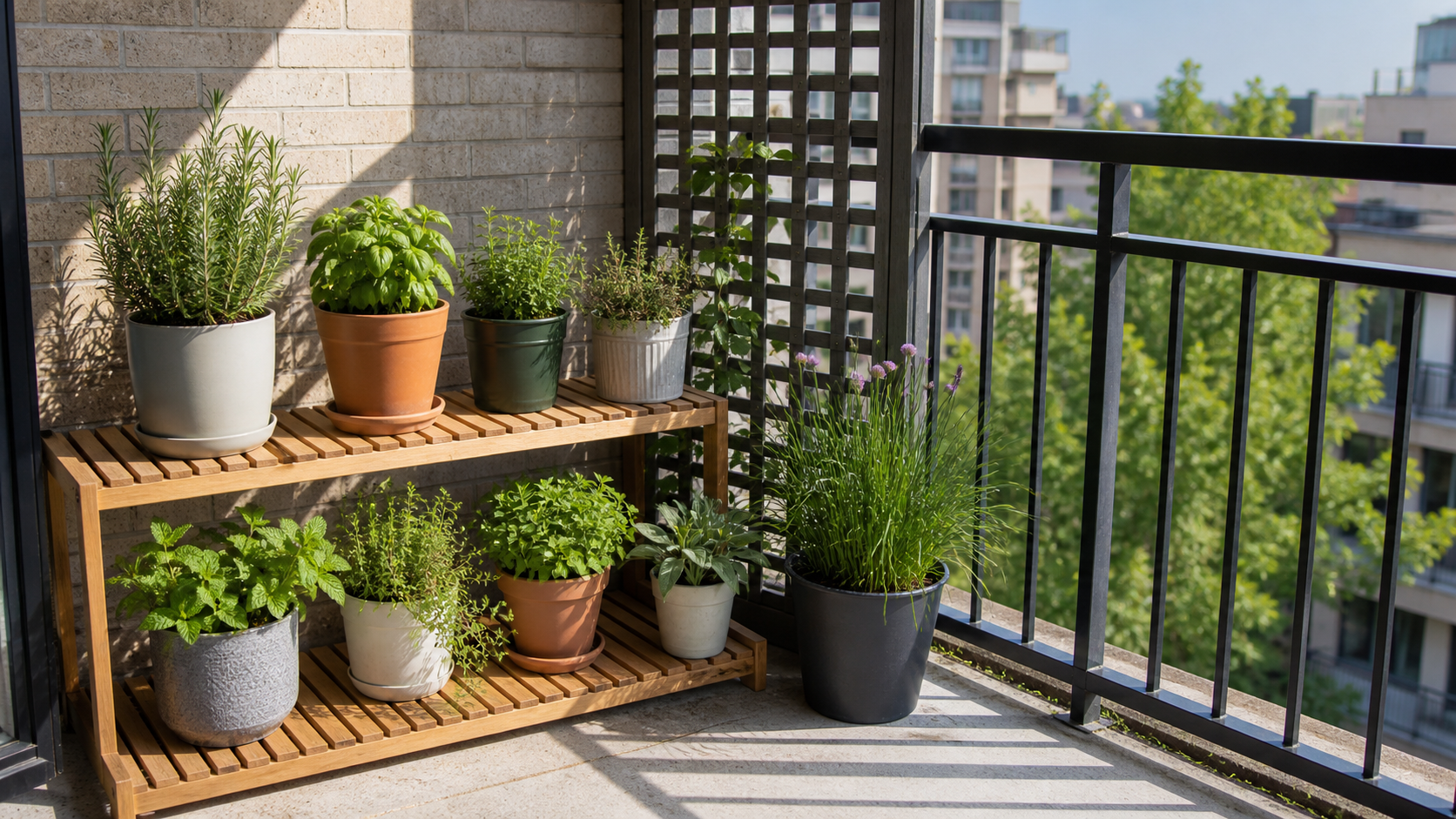
Choose heat-tolerant herbs first
Rosemary, thyme, oregano, sage, and established basil can handle bright afternoon sun with adequate root room. Cilantro and parsley may struggle in midsummer heat.
Reduce heat load
Use larger pots, light-colored containers, and shelves that prevent direct contact with hot surfaces. A shade cloth panel can help during heat waves if building rules allow it.
Check water before the hottest period
Morning checks give plants moisture reserves before afternoon stress. Avoid repeatedly watering already-wet soil just because leaves droop in heat.
Quick checklist
- Use 8 inch or larger pots
- Choose rosemary, thyme, oregano, sage, and basil
- Check soil in the morning
- Add temporary shade during heat waves
- Keep cilantro for cooler seasons
Balcony fit check
Before buying more supplies, test this advice against the balcony you actually have. For west-facing balcony herbs, check Use 8 inch or larger pots and Choose rosemary, thyme, oregano, sage, and basil, then look closely at choose heat-tolerant herbs first. That pass usually shows whether the next fix is better placement, a different pot, a simpler plant list, or a watering change. If you are still planning the whole setup, start with the balcony herb garden beginner guide.
Balcony conditions shift by season, floor height, nearby buildings, and railing design. Recheck the actual growing spot before blaming the plant. Light, wind, reflected heat, and slow-drying shade explain many common herb problems.
Make one change at a time and watch the plant for several days. If the setup still feels off after adjusting reduce heat load, simplify before adding more gear. Balcony herbs usually respond faster to better light, steadier watering, and less crowding than to extra products.
What to read next
If this topic matches your balcony, compare it with South-Facing Balcony Herbs and Balcony Wind Protection for Herbs . Then use the container herb planner if you need a quick potting mix estimate before buying containers or soil.
Pick the next page by the decision in front of you. The best herbs for balconies chart is useful when you are comparing plants by sun, pot size, watering, and difficulty. Use the printable sun and pot size chart, watering chart, and compatibility chart for quick setup checks. Related guides below are better when you already know the constraint you need to solve.
Save notes on what worked, especially sun hours, watering frequency, and container size. Those observations make the next herb choice easier and help you avoid repeating the same balcony constraint in a different pot.